Plymouth from Boston: The Rock Managed Honestly, the Mayflower II, and the Whole Story at Plimoth Patuxet
America’s origin-story town handles its famous rock with a sense of humor and its history, increasingly, with the whole cast. The bus from Boston takes an hour; the museum takes the day’s heart.
The short version
- Direct buses run Boston’s South Station to Plymouth in about an hour at commuter frequency; the commuter-rail alternative reaches Kingston with a local connection — fares and modes via mbta.com.
- Plymouth Rock, 1620-carved and portico-enshrined, is a managed anticlimax the town treats with affectionate irony — see it in ninety seconds and enjoy the seeing.
- The Mayflower II — the full-scale 1957-built replica, freshly restored — moors at the state pier with costumed crew working the rigging and the answers; tickets via plimoth.org.
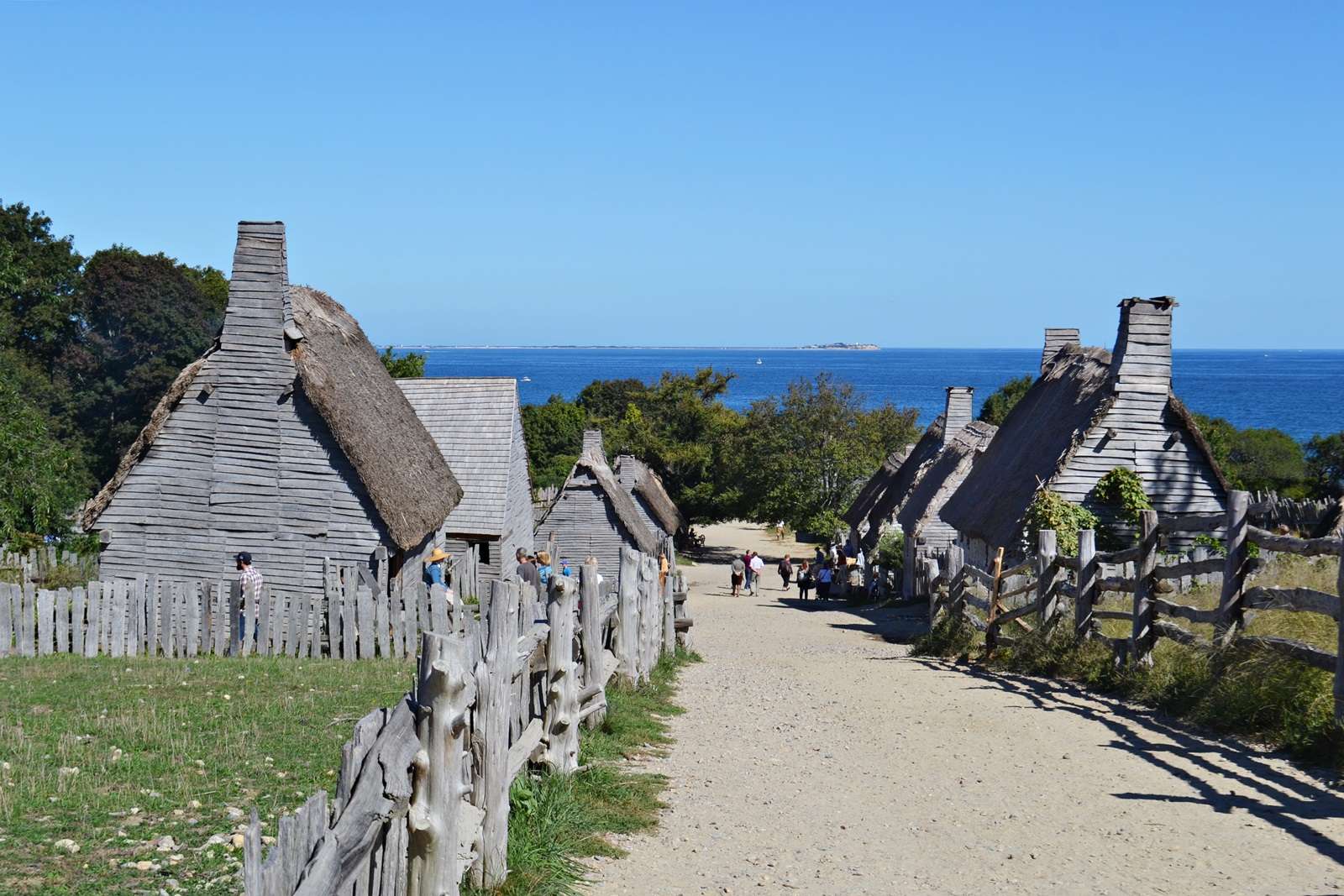
- Plimoth Patuxet Museums’ main campus runs the double site: the 17th-century English village in role-played 1627, and the Historic Patuxet homesite where Wampanoag staff — speaking as themselves, not characters — present their nation’s history and present.
- The combo ticket bundling village, homesite, Mayflower II, and the grist mill is the correct purchase and prices around the mid-$40s.
- Burial Hill’s colonial graves, the National Monument to the Forefathers’ granite enormity, and a waterfront chowder round out the town itself.

Getting there
The direct bus from South Station is the clean answer — about an hour, frequent departures, arriving near the waterfront’s walkable mile. The commuter rail’s Kingston line plus a local hop serves rail loyalists with more moving parts. Drivers do it in under an hour outside rush and park at the harbor. The museum’s main campus sits a couple of miles south of downtown — the seasonal local shuttle, a short cab, or a flat forty-minute walk along the shore connects them; plan that leg rather than discovering it.
The day
Waterfront first: the Rock’s cheerful anticlimax, then the Mayflower II’s decks — the ship’s smallness is the exhibit, 102 passengers in a space your eyes refuse to believe, and the crew’s answers are worth your questions. Then the main campus for the day’s substance. Take the Patuxet homesite first and unhurried: staff speak as contemporary Wampanoag people about 12,000 years of their history, the epidemic that emptied Patuxet before the English landed, and everything after — it reframes the village you’ll walk next. The 1627 English village’s role-players hold their year with disarming commitment; the craft centers and grist mill fill the gaps. Chowder and Burial Hill close the town loop before the evening bus.
When to go
May through October runs the full living-museum program with the harbor at its best; summer weekends bring family volume the campus absorbs well. Late November is the town’s high holiday in both senses — Thanksgiving week stages parades, museum programs, and the National Day of Mourning observance held by Native organizations on Cole’s Hill, all part of the same story told straight. Winter closes the outdoor sites into a quiet harbor town; the season’s dates at plimoth.org govern everything, per the alarm’s booking rule.
Frequently Asked Questions
Is Plymouth Rock really that underwhelming?
It’s a modest boulder with a disputed pedigree under a grand portico — and the town’s own gift shops sell the joke. Treat it as a two-minute ritual, not a destination, and it does its small job fine.
What’s changed about how the story is told?
The museum’s renaming to Plimoth Patuxet and the homesite’s expansion put the Wampanoag half of 1620s history on equal footing, presented by Wampanoag people in their own voice. It’s the difference between a pageant and history — and the visit’s strongest hour.
Mayflower II — replica or relic?
A 1957-built, historically rigorous replica, restored stem to stern for the 400th anniversary. It sails on occasion, works as a museum daily, and answers the only question that matters: how small the crossing really was.
How much time does the museum need?
Three hours minimum across homesite, village, and crafts; four sits better with children or genuine curiosity. Shortchanging it to collect the Rock faster inverts the day’s actual values.
Can I combine Plymouth with Cape Cod?
Geographically adjacent, practically greedy — the bridge traffic and the museum’s demands fight each other. Plymouth fills its day honestly; the Cape needs its own.